

A New Year, a New Way of Relating
A new year often arrives with a sense of hope. It’s a natural time to pause, reflect, and think about what we want to feel differently moving forward, especially in our closest relationships.
Many couples begin January thinking about relationship goals for the new year, hoping for more calm, more connection, and fewer painful cycles.
Yet even with the best intentions, old patterns have a way of resurfacing, particularly during stress, conflict, or emotional overwhelm. You may find yourselves having the same arguments, shutting down in familiar ways, or feeling disconnected despite wanting closeness.
This doesn’t mean your goals in a relationship are unrealistic or that something is “wrong” with either of you. More often, it means the relationship has fallen into a pattern that no longer serves you.
In this post, we’ll explore why relationship patterns repeat, how emotions drive our reactions, and how couples therapy can help partners reconnect and create meaningful new year goals that actually last.
Relationships as a Dance: Understanding the Pattern
Every relationship functions like a dance. Each partner brings their own steps, rhythms, and instincts. Some dances feel smooth and predictable — gentle, connected, and easy to move through together. Others feel chaotic and exhausting.
In distressed relationships, the “music” can feel loud and overwhelming. When the rhythm feels like heavy metal, it’s nearly impossible to dance a graceful waltz, even when both partners want to. Conversations escalate quickly, emotions run high, and misunderstandings arise.
The key insight here is important: The problem usually isn’t that one partner is “bad at relationships.” The problem is the dance itself, or in other words, the relationship pattern that has developed over time.
Understanding this can shift blame into curiosity and open the door to healthier relationship goals built on awareness rather than frustration.
When Toes Get Stepped On: How Conflict Escalates
When relationships feel strained, partners often hurt each other unintentionally. One person says something sharp. The other feels wounded. That pain triggers an emotional response, and the cycle escalates.
These reactions can look like:
- Saying unkind or reactive things
- Shutting down or withdrawing
- Defending, attacking, freezing, or people‑pleasing (often described as fight, flight, freeze, or fawn)
What’s easy to miss in these moments is that anger is rarely the root emotion. Underneath anger is usually hurt, fear, or sadness.
A gentle reframe can be powerful here. When pain is met with defense, disconnection grows. When pain is met with understanding, the tension between partners can begin to ease.
Naming the Dance: Awareness Is the First Step
Most of us can clearly see what our partner is doing “wrong.” It’s much harder to see our own steps in the dance.
Change becomes possible when both partners can say, “We are both participating in this pattern.” This doesn’t mean blame. It means shared responsibility and shared power to change.
In therapy, couples often work through a simple but meaningful process:
- Name it: Identify the pattern as it’s happening
- Claim it: Acknowledge your own role in the dynamic
- Change it: Choose a new response
If we can name a pattern, we can claim it. And once we claim it, we can begin to change it. This awareness forms the foundation for healthier goals for a relationship that feel realistic and compassionate.
Why Promises Alone Don’t Work
Many couples enter the new year making promises to one another:
- “I’ll never say that again.”
- “I’ll stay calm next time.”
- “I’ll communicate better.”
While these intentions are sincere, they often fall apart during moments of emotional stress. This isn’t because partners don’t care or aren’t trying hard enough. It’s because logic doesn’t run the show in emotionally charged moments; emotions do.

Without understanding what triggers emotional reactions, old patterns tend to resurface automatically. That’s why many relationship New Year’s resolutions feel hopeful in January and discouraging by March.
Emotions Drive Everything (Even When We Wish They Didn’t)
As humans, we are emotional beings with language. We don’t just feel emotions. We talk about them, interpret them, and respond through them.
Emotions initiate behavior long before logic has a chance to weigh in. Neuroscience shows us that without emotional input, decision‑making becomes nearly impossible.
In one well‑known case study, a man with intact intelligence but impaired emotional processing struggled to make seemingly simple decisions. Without emotion to guide him, every choice required an exhausting analysis.
This illustrates an important truth: Emotions aren’t obstacles to healthy relationships. They are essential to them.
When we understand how emotions drive our reactions, we can begin to respond more intentionally, creating healthier new year relationship goals rooted in emotional awareness.
A New Paradigm: From Defending to Understanding
Most of us are taught to explain ourselves and defend our actions during conflict. We focus on why we did something rather than what we were feeling.
Therapy introduces a different approach, one that can feel counterintuitive at first. Instead of debating facts or intentions, couples are guided to explore the emotions underneath their reactions.
This shift allows partners to:
- See the pain beneath behaviors
- Develop empathy and compassion
- Respond thoughtfully rather than react automatically
This emotional lens isn’t something most people are taught growing up or modeled in culture. That’s why learning it often requires support.
How Therapy Helps Change the Dance
Couples therapy offers a space to slow things down and look at the relationship from a new perspective. With the guidance of a therapist, partners can begin to:
- Identify emotional triggers
- Understand how they impact one another
- Learn a shared emotional language
Rather than trying to “fix” each other, couples learn how to co‑create a calmer, more connected rhythm. Over time, the dance itself begins to change.
For many couples, therapy becomes one of the most meaningful New Year’s resolutions for couples. Not because it’s about perfection, but because it’s about growth.
Reconnecting in the New Year: Small Shifts, Big Change
Real change doesn’t come from flawless communication or rigid promises. It comes from awareness, emotional understanding, and consistent practice.
When both partners commit to noticing the dance and adjusting together, connection becomes possible again. These small shifts can support lasting relationship goals, marriage goals for the new year, and deeper intimacy.
An Invitation to Begin Again
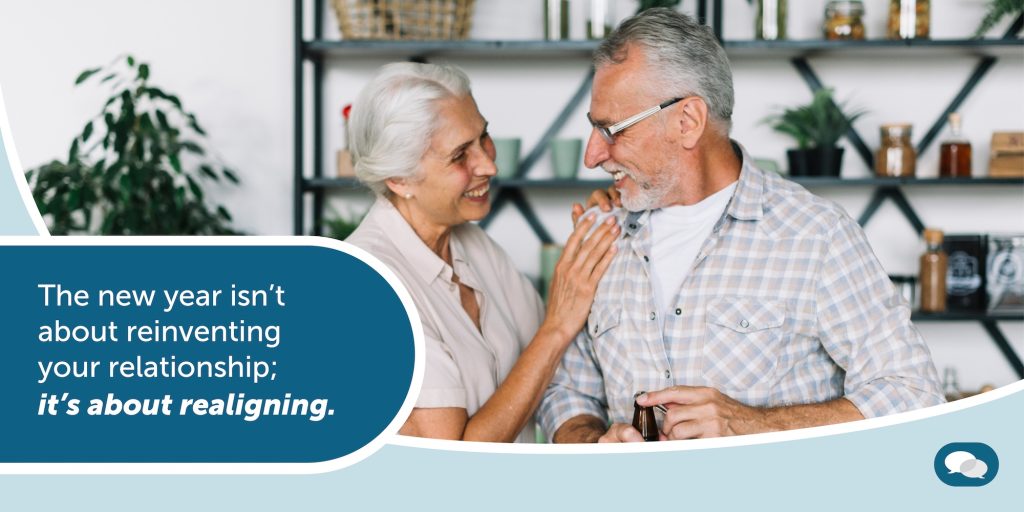
Leaving old patterns behind starts with compassion for yourself and for your partner. If you feel stuck, frozen, or unsure how to change the dance, you don’t have to figure it out alone.
At The Wellness Counseling Center, we offer individual and couples therapy to help partners strengthen their relationships and move into the new year with greater clarity and connection.
If you’re exploring couples’ New Year’s resolution ideas or are simply curious about therapy, we invite you to reach out and take the next supportive step toward a healthier, more connected 2026.
At Wellness Counseling Center, our therapists use Emotionally Focused Therapy to help couples rebuild trust, closeness, and emotional security within a safe and supportive environment.
Contact us today to start your journey toward a stronger, more connected relationship.


