

When couples come to therapy, they’re often exhausted from having the same arguments over and over again. They may feel disconnected, misunderstood, or stuck in a cycle they can’t seem to break.
Emotionally Focused Therapy (EFT) is one of the most researched and effective approaches for helping couples rebuild connection. Rather than focusing on communication techniques, learning about conflict resolution or negotiating a truce, EFT helps partners understand the emotions and attachment needs that drive human thoughts, behaviors and everyday interactions.
The process follows three Emotionally Focused Therapy stages and nine distinct steps that gradually help couples move from conflict and disconnection toward emotional safety and secure connection.
Understanding the stages of Emotionally Focused Therapy can help couples relax and know more about what to expect from the process. It’s also helpful to know more about why EFT has been so effective in helping couples strengthen their relationships.
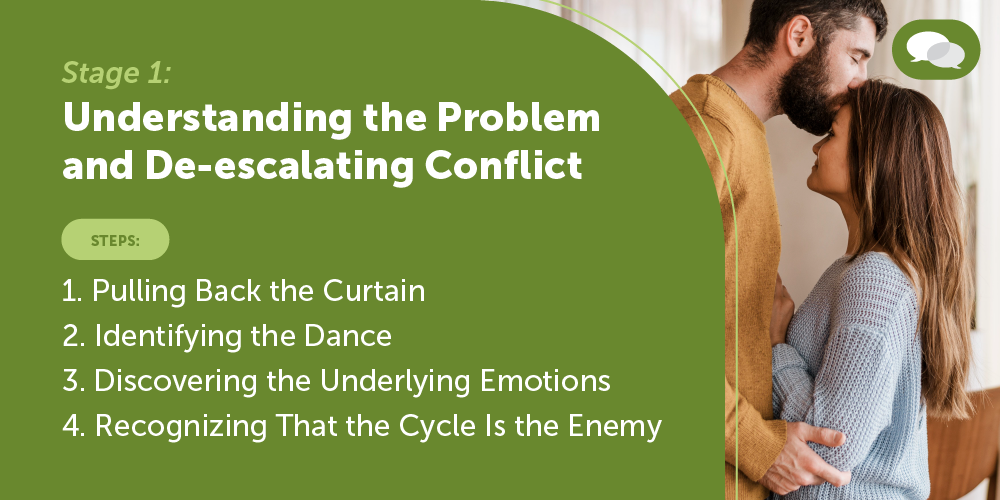
Stage 1: Understanding the Problem and De-escalating Conflict
The first stage is deeply personal. Before a couple can create new patterns in their relationship, it’s important to understand the ones that already exist.
Many partners come to couples therapy focused on the latest argument or disagreement. While those issues matter…a lot… EFT looks under the surface to understand the emotional experiences and patterns driving the conflict.
Step 1: Pulling Back the Curtain
The process begins with getting to know the people and….the relationship.
The therapist meets with both partners together and also spends some individual time with each person. The goal is to better understand what’s causing the relationship distress and how each partner experiences the challenge they are facing. After all, there was a time when both partners enjoyed and delighted each other. The EFT therapist wants to know what happened.
Rather than looking for who is right or wrong, the therapist begins uncovering the story beneath the conflict. This first step helps create a roadmap for the rest of the Emotionally Focused Therapy step-by-step process and allows the therapist to better understand the relationship dynamic as a whole.
Step 2: Identifying the Dance – AKA – The Negative Cycle
Every couple has a pattern….a dance…a negative cycle. No matter what you call it, every couple has one. The difference is some couples can step out of it; others get stuck in it.
Here’s a metaphor that might help. Imagine his pattern as a dance. Most people want to do a beautiful dance with their partner, but if the music playing in the background doesn’t match what they’re trying to do, partners will step on each other’s toes. At first, it’s uncomfortable but over time it hurts and can become annoying, even unbearable.
In a classic case of relationship distress, one partner pursues, the other withdraws. One criticizes, the other shuts down. The specific steps may vary, but a couple will develop a recurring cycle that keeps them feeling frustrated and disconnected.
One of the most important steps in Emotionally Focused Therapy is identifying the dance so everyone can see it clearly. Once couples recognize the pattern, they often realize that they are not fighting each other as much as they are fighting the cycle itself. When this happens, the cycle can be viewed as their common enemy.
Step 3: Discovering the Underlying Emotions
Many relationship conflicts are driven by emotions that never get fully expressed. A partner may think:
● My partner doesn’t care about me.”
● “I’m not important to them.”
● “They don’t love me anymore. Sometimes it seems as if they don’t even like me!”
These painful emotions create the reactivity that fuels conflict.
What looks like anger on the surface is often rooted in hurt, fear, loneliness, disappointment, or a sense of insecurity. A partner who lashes out may actually be feeling rejected. A partner who withdraws may be protecting themselves from feeling hurt or overwhelmed.
The EFT therapist helps couples move beyond surface-level arguments and understand what is happening emotionally underneath their behaviors.
Step 4: Recognizing That the Cycle Is the Enemy
One of the most powerful shifts in EFT happens when couples stop blaming each other. The problem is not the other person, but rather the cycle itself.
When couples begin seeing the pattern as the issue, they can work together and rally against it rather than against one another. This shift often creates relief because it allows partners to move away from blame and toward an understanding of what’s really going on.
By the end of this Emotionally Focused Therapy stage, many couples have a much clearer understanding of the cycle that has kept them stuck.
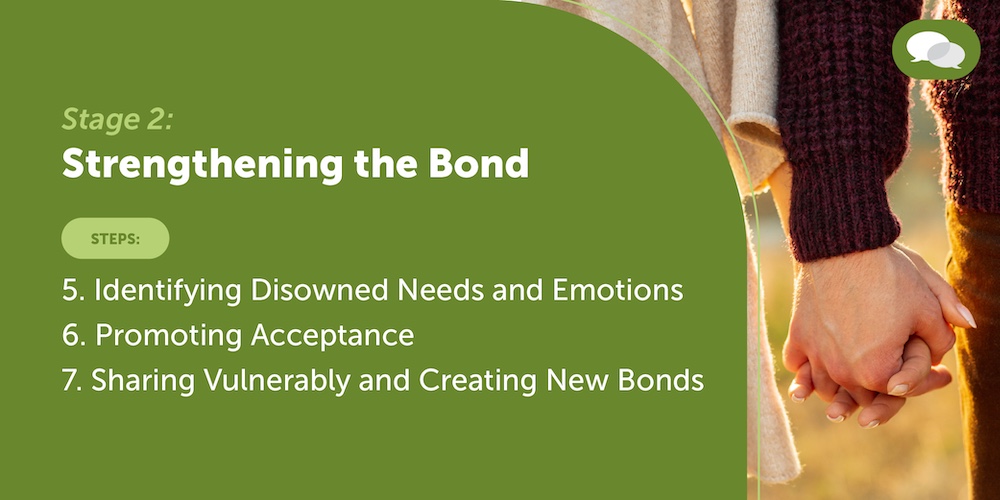
Stage 2: Strengthening the Bond
Once the negative cycle has been identified, the focus shifts to creating emotional responsiveness and a deeper connection.
This stage requires both partners to actively participate and share their experiences with one another. It’s often a transformative part of the process, as this is where couples begin creating new emotional experiences together.
Step 5: Identifying Disowned Needs and Emotions
Many people don’t realize what they’re truly feeling underneath their reactions. For example, anger is often easier to express than fear. There are lots of emotions that sit right on top of fear. I’ve listed a few below:
- Anger
- Anxiety
- Hurt
- Shame
- Disappointment
- Irritation
- Sadness
EFT helps people recognize these deeper emotions, take ownership, and talk about them, rather than protecting themselves with reactive behaviors such as jabs, yelling or shutting down. As these feelings become clearer, individuals get a better sense of what they need from their partner.
Step 6: Promoting Acceptance
As partners begin exploring their own emotional experiences, and share with their partner, they begin to better understand each other’s experiences as well.
Acceptance does not mean agreeing with everything your partner says or feels. Instead, it can sound like:
- “I get it..”
- “I hear you.”
- “What you’re saying / feeling is starting to make sense to me.”
- “I can see why you feel that way.”
These moments create empathy and emotional safety.
When people feel heard, understood and accepted rather than judged, they’re often willing to remain open and emotionally present. Acceptance also helps strengthen trust and creates a foundation for a deeper connection.
Step 7: Sharing Vulnerably and Creating New Bonds
This is where couples can experience meaningful shifts in their relationship. Partners begin speaking from the heart rather than from anger. For example, rather than saying, “You always yell at me,” a partner might say, “I’m scared when voices get raised.”
These conversations allow partners to truly see and hear one another.
This is often a powerful bonding experience and one of the most meaningful moments within all of the Emotionally Focused Therapy stages. When vulnerability is met with understanding, couples can create real change and connect in new ways.
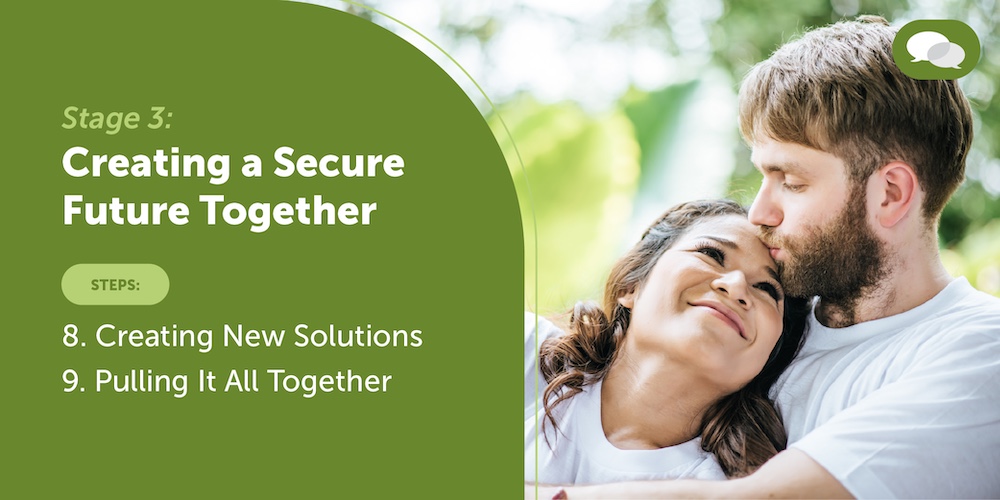
Stage 3: Creating a Secure Future Together
The final stage focuses on helping couples apply what they have learned and create lasting change.
After identifying the cycle and strengthening their emotional bond, couples are ready to use these new insights in their everyday lives.
Step 8: Creating New Solutions
As partners become more aware of their emotions, needs, and relationship patterns, they’re often able to approach problems differently. Instead of falling back into old reactions, they begin developing healthier ways of responding to one another.
The focus becomes: “How are we going to handle this moving forward?”
This allows couples to meet disagreements with greater empathy, flexibility, and collaboration.
Step 9: Pulling It All Together
The final step is consolidation. Couples reflect on:
- What their relationship looks like now
- How conflict feels different
- What emotional safety looks like
- How they will maintain these changes in the future
This final step helps ensure that the growth experienced during therapy feels sustainable and integrated into everyday life.
Ready to Strengthen Your Relationship?
If you and your partner feel caught in the same arguments, disconnected from one another, or unsure how to move forward, EFT is a well-researched and effective approach that can help rebuild your connection.
At Wellness Counseling Center, our therapists help couples identify negative relationship patterns, strengthen emotional connection, and create lasting change through evidence-based approaches like EFT.
If you’re ready to build a stronger, more secure relationship, we invite you to schedule a free consultation with our team and learn how couples therapy can help you reconnect and move forward together.


