

When talking about couples therapy, many people still believe it’s only for partners in crisis. But there’s something else worth knowing: Not all couples therapy is the same, and the model a therapist uses matters far more than most people realize.
Couples therapy done well is one of the most powerful investments a relationship can make. That said, when it isn’t grounded in an approach specifically designed for couples, well-intentioned therapy can leave partners feeling more stuck, more misunderstood, and more discouraged than when they started.
Many couples who find their way to our practice have already been on a long journey — sometimes through two, three, or four other offices — wondering why things keep getting harder instead of better. The answer, more often than not, comes down to the model.
At Wellness Counseling Center, we utilize Emotionally Focused Therapy (EFT) for couples, which is a proven, evidence-based approach to strengthening relationships, especially before marriage, after remarriage, or when life together begins to feel more complex and demanding.
Today, many couples seek therapy not as a sign of distress, but as a signal of their dedication to building a strong foundation. Taking early action to build love, trust, and attachment can help couples stay connected and remember they’re on the same team when things get challenging.
Why Many Couples Seek Therapy Before There’s a Problem
Many couples who inquire about premarital or couples counseling are not distressed, nor are they trying to decide if they’re compatible. These couples understand that the core foundations of a relationship are trust and connection, and they’re putting in the work early to ensure the best possible start.
Seeking counseling before a crisis can help couples:
- Strengthen communication: Communication styles between partners can vary widely, depending on personal preference, family culture, and past experiences. EFT for couples can help identify and address potential disconnects between how one partner expresses a need and how the other receives it.
- Learn how to handle conflict productively: When issues do arise, counseling can prepare couples to handle conflict in a safe, loving way, centering connection even during a disagreement.
- Feel like they’re truly on the same team: EFT helps couples equip themselves with tools and strategies to address future issues together, even when opinions differ. Knowing your partner is on your side provides a sense of support that makes even the most stressful situation more manageable.
- Build habits that protect the relationship long-term: Establishing strong patterns from the beginning ensures the foundation of a relationship isn’t quietly worn down by small cracks or unaddressed hurt.
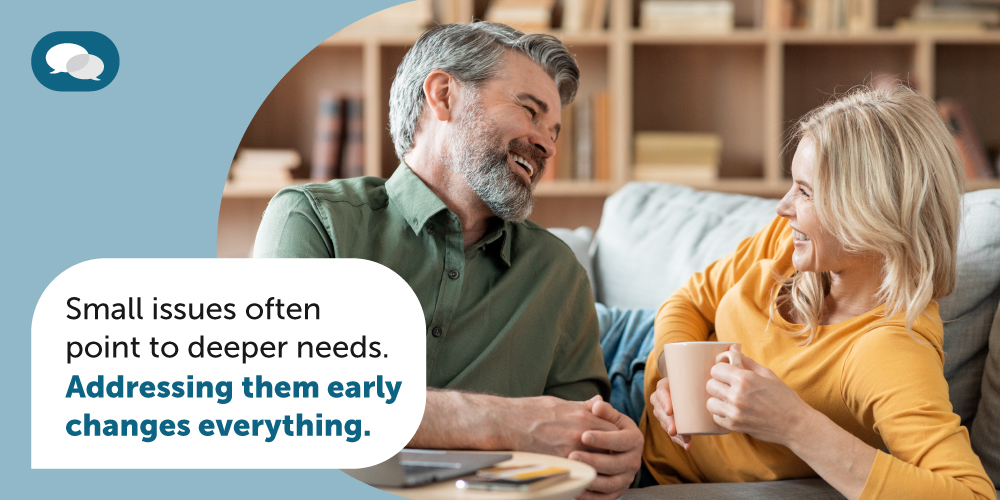
Many older couples and those entering marriage again share a strong commitment to building a solid foundation.
With experience comes insight, an understanding that small, recurring issues often point to deeper, unresolved pain. Rather than repeating old patterns, these couples are choosing to approach their relationships with greater intention, clarity, and care. EFT for couples helps them do just that.
What Does “Strengthening the Foundation” Actually Mean?
The foundation of a healthy relationship is not built on uninterrupted agreement. Many healthy couples disagree on a wide range of issues. The core foundation of a relationship is based on attachment, which is the deep need humans have for a safe emotional connection.
When the attachment between partners is strong and safe, it means:
- You feel like partners, not opponents
- You trust that your partner’s intentions are good, even during conflicts
- You know how to navigate disagreements without them escalating
When attachment feels weak or strained, small habits and minor issues can begin to fester. Over time, this can leave one or both partners feeling that their concerns don’t matter and, by extension, that they don’t matter to their partner.
These recurring arguments are often signals of something deeper, not the real problem itself. For example, a couple arguing about turning off the lights when leaving a room is rarely just fighting about electricity.
One partner may be carrying financial anxiety and feeling unseen or unsupported in their stress, while the other may feel criticized or belittled over what seems like a minor oversight. Without understanding the emotions underneath, these small conflicts can quietly erode connection.
The Right Type of Therapy Helps You Get on the Same Team
Building a life together is complex. Raising children, managing finances, and making long-term decisions can be challenging, especially when partners see things differently or hold unspoken expectations about what matters most.
Take financial security, for example. One partner may define it as having enough flexibility to enjoy life and spend freely at times, while the other may see security as saving diligently and minimizing risk. Without understanding each other’s perspectives, these differences can quickly turn into tension or conflict.
Couples counseling — especially EFT — helps partners slow down and reconnect so they can:
- Understand and respect each other’s viewpoints
- Stay emotionally connected during times of stress
- Make decisions collaboratively, rather than from opposing sides
When you trust that your partner truly understands and cares about your concerns, alignment grows. And with alignment comes greater ease, resilience, and the ability to navigate challenges together instead of apart.
How Emotionally Focused Therapy Supports Stronger Bonds
This is where the model truly matters. Emotionally Focused Therapy is an evidence-based, short-term approach to psychotherapy that focuses on strengthening emotional connection rather than assigning blame or trying to “fix” behavior.
In couples work, EFT helps partners learn to notice, accept, and express deeper emotions while building healthier, more supportive interaction patterns.
It can be helpful to think of relationship challenges as an iceberg. What’s visible above the surface is the everyday conflict: disagreements about spending, chores, or turning off the lights. Beneath the surface, however, are deeper needs, fears, and longings that often go unspoken.
What appears to be a small irritation is often a signal of a deeper wound, leaving one or both partners feeling unheard, unimportant, or disconnected. EFT helps couples slow down and understand what’s really happening on both sides, not just the surface issue.
Couples exploring EFT are often relieved to discover that:
- Therapy isn’t about negotiating fights or choosing sides
- Both partners’ experiences make sense
- Lasting change happens when deeper needs are recognized and named
By uncovering the “underside of the iceberg,” EFT brings clarity and compassion back into the relationship. Couples often realize it was never really about the lights or the bank account and that they’re not opposing each other. They’re in the boat together.
Assuming Good Intent Changes Everything
One of the most powerful aspects of EFT is its assumption of good intent from both partners. Behaviors that may look like control, withdrawal, or indifference on the surface often carry deeper meaning. More often than not, they’re attempts to express a need or fear that feels too vulnerable to voice directly.
Emotionally Focused Therapy for couples provides a safe, supportive space to explore those underlying needs together. Instead of reacting defensively, couples learn to build trust and understanding. As partners begin to truly understand each other’s inner experiences, conflict often softens on its own.
Couples who seek therapy to build a strong foundation are thoughtful and capable. As they learn to recognize patterns in their interactions, many discover they already know how to respond differently.
That awareness creates room for change, allowing trust, rather than defensiveness, to become the first response, even during moments of conflict.
Why This Matters More Than Ever
Today’s couples are navigating more pressure than ever before. To return to the iceberg metaphor, modern relationships often feel like an icy ocean: surrounded by financial stress, emotional demands, social expectations, and professional responsibilities. It’s no wonder connection can feel harder to maintain.
Adding to the challenge is the sheer volume of relationship advice online and on social media. While often well-intentioned, this flood of information can leave couples feeling overwhelmed, confused, or pulled in conflicting directions.
Emotionally Focused Therapy stands apart because it is:
- Clear and approachable
- Deeply human and intuitive
- Grounded in decades of scientific research
- Highly effective for both struggling and stable couples
“Working with Anne was a turning point for us. I felt heard and respected, and we learned to communicate without things escalating. Our relationship is stronger, calmer, and more connected than ever because of this experience.” – Wellness Counseling Center Client
At its core, EFT is about strengthening the emotional bond through trust, compassion, and understanding. When couples feel supported by one another, they can see what’s truly driving their patterns and replace confusion and distance with clarity, connection, and lasting change.
Take the Next Step Toward a Stronger Foundation
If you and your partner are feeling stuck, disconnected, or simply want to strengthen your bond, you don’t have to navigate it alone.
At Wellness Counseling Center, our experienced therapists offer EFT for couples and immersive intensives designed to help you reconnect, communicate more clearly, and feel secure with one another again.
Reach out today to learn more about our couples therapy services or 1-Day and 2½-Day Intensives and take the next step toward a stronger, more connected relationship.


